
Written by Ian Smith Article Date: November 11, 2026
America Recycles Day arrives this Sunday, and the usual message is simple: recycle more. But a new national campaign points to the harder part. WM says three in four Americans already report that they recycle, while nearly half are actively looking for ways to recycle more. The gap is not only motivation. It is knowing what to do with an item while standing in front of a bin.
That few seconds of uncertainty matters. A recyclable bottle placed in trash is a lost resource. A plastic bag, cup full of liquid, or other unacceptable item placed in recycling can create extra handling, interfere with sorting equipment, or lower the value of the material that a facility is trying to sell.
Clear Stations Change What People Do
The University of Michigan recently reported early results from a centralized waste station project in its Ruthven Administration Building. The university removed deskside landfill bins and installed consistent shared stations with clear labels for recycling, compost, and landfill.
After the change, recycling contamination fell 80 percent. The building diverted 28 percent more material to recycling and compost, total waste fell 20 percent, and the new setup eliminated about 9,000 plastic liner bags per year. Those are first month results from one building, not a promise that every site will perform the same way. Still, they show that bin design is an operating decision, not just decoration.
The labor implications are real too. In a 2024 survey of 170 colleges and universities, schools that moved away from deskside collection frequently reported labor savings. Among respondents using centralized systems, 86 percent reported labor savings from office locations and 93 percent from classrooms. Fewer collection points can mean fewer liners, fewer stops for custodial teams, and more attention on shared stations where sorting guidance can be consistent.
Recycling Is Getting More Complicated
The material stream is not standing still. The Recycling Partnership's 2026 State of Recycling report draws on more than 9,000 programs serving 97 percent of the U.S. population. Its latest installment tracks 16 material categories and describes residential packaging as lighter, more varied, and more operationally complex.
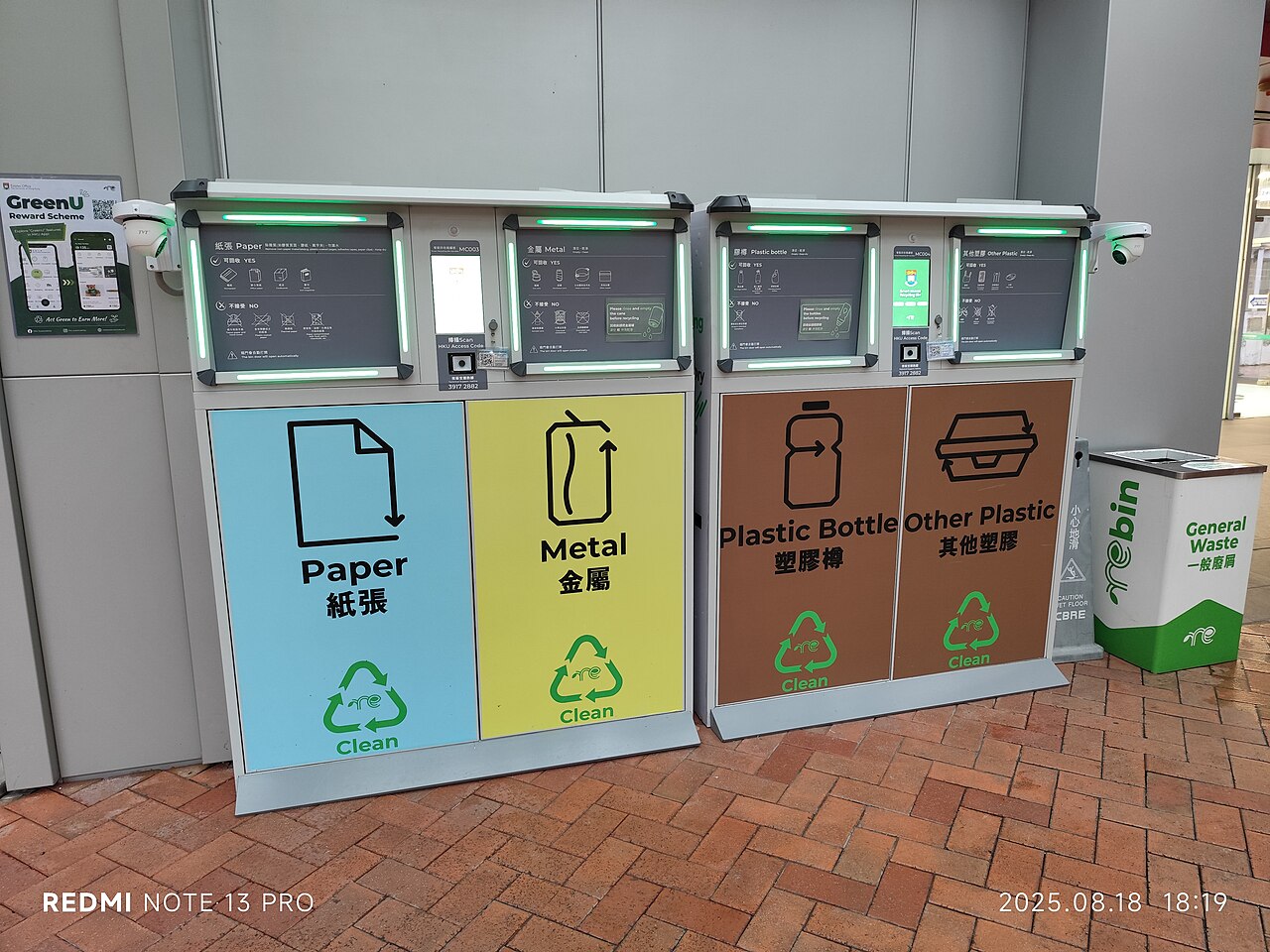
That helps explain why a symbol on a package is not enough. Local programs accept different materials, and packaging keeps changing faster than many signs and habits. A well designed station should tell people what belongs in the available streams, place trash and recycling choices together, use consistent colors and openings, and give a useful answer when someone is unsure.
The financial stakes extend beyond collection. EPA's latest Recycling Economic Information study found that recycling and reuse activity supported 681,000 U.S. jobs, $37.8 billion in wages, and $5.5 billion in tax revenue in a single year. Clean, correctly sorted material is the feedstock behind that economic activity. Contamination adds work while recoverable material placed in trash never reaches it.
This is where better information at the bin can improve a whole program. Deposit level waste data can show operators which locations and items cause repeated confusion. Immediate recycling education can help people make a better choice before a mistake disappears into the container. MyMatR's Maestro, an automatic sorting waste bin, adds automatic rotation to direct a deposit toward one of two customer configured trash or recycling streams. The goal is not to replace local recycling rules, but to make those rules easier to follow at the moment they matter.
For America Recycles Day, the most useful pledge may be more specific than “recycle more.” Make every disposal point clear, measure what actually lands there, and improve the system where people are still guessing.
Sources
- Waste360, “WM Launches ‘I Recycle’ Pledge Ahead of America Recycles Day” - University of Michigan Record, “U-M campus community strengthens waste-reduction efforts” - Busch Systems, “Standardizing Waste Collection in Offices and Academic Areas” - The Recycling Partnership, “2026 State of Recycling Report” - U.S. Environmental Protection Agency, “Recycling Basics and Benefits” - Featured image: “HKU PFL campus recycle sorted bins August 2025 N13P” by Haihongu KWAM LaunEC 800, CC0