Written by Ian Smith Article Date: 2026-08-26
Welcome back to Waste Watch Wednesday. This week, millions of students are settling into new schedules, and school lunch is part of that reset. The U.S. Department of Agriculture put child nutrition programs back in the national conversation on Monday with its new Harvest to Hallways initiative. Here in North Carolina, families across the Triangle are also moving from back-to-school planning into the daily reality of buses, bells, packed lunches, and crowded cafeterias.
The scale is easy to underestimate. USDA's latest National School Lunch Program summary says about 30 million students participated on an average day in fiscal year 2025. Schools served roughly 4.87 billion lunches through the program that year. Every one of those meals creates a short disposal moment involving some combination of leftover food, cartons, bottles, trays, wrappers, napkins, and utensils.
That moment is harder than it sounds. Students often have only a few minutes to clear a table and get to the next class. The packaging changes from meal to meal. Recycling rules vary by community, and an item that looks recyclable may not belong in the local program. A carton with liquid still inside or a recyclable container mixed with food can also create contamination beyond that one item.
At school scale, small sorting mistakes become an operating problem. Custodial teams have to service busy disposal points within a fixed schedule. Cafeteria staff need traffic to keep moving. Recycling coordinators need clean enough material to satisfy the local hauler. When the streams are mixed, schools can lose recyclable material, pay to haul more trash, or spend staff time correcting a problem after the bin has already been filled.
Food makes the system even more complicated. The Environmental Protection Agency estimates that food accounts for 24% of the material in U.S. municipal solid waste landfills and is responsible for 58% of landfill methane emissions released to the atmosphere. Preventing edible food from becoming waste is the best outcome. After that, keeping food separate from dry recyclables helps preserve whatever recovery options a school and its local waste system actually support.
The useful lesson is not that students need a longer sign above the bin. It is that schools need to understand where confusion happens. One cafeteria may struggle with half-full cartons. Another may see wrappers entering a recycling stream because the openings and labels look alike. A third may have good sorting at lunch but lose control during assemblies, sporting events, or after-school programs.
That is where source-side education and deposit-level waste data become valuable. MyMatR Coach is designed to give people immediate trash and recycling guidance while helping a site see what is being discarded. Maestro adds automatic rotation between two customer-configured trash or recycling streams. Neither product replaces a school's food recovery or composting program, but an AI smart waste bin can help protect the dry trash and recycling streams that sit beside it.
That wraps up this week's Waste Watch Wednesday. Back to school is a systems reset, and the cafeteria is one of the busiest systems students use every day. Better instructions help, but better feedback and better waste data can show schools what is actually happening when the lunch bell rings.
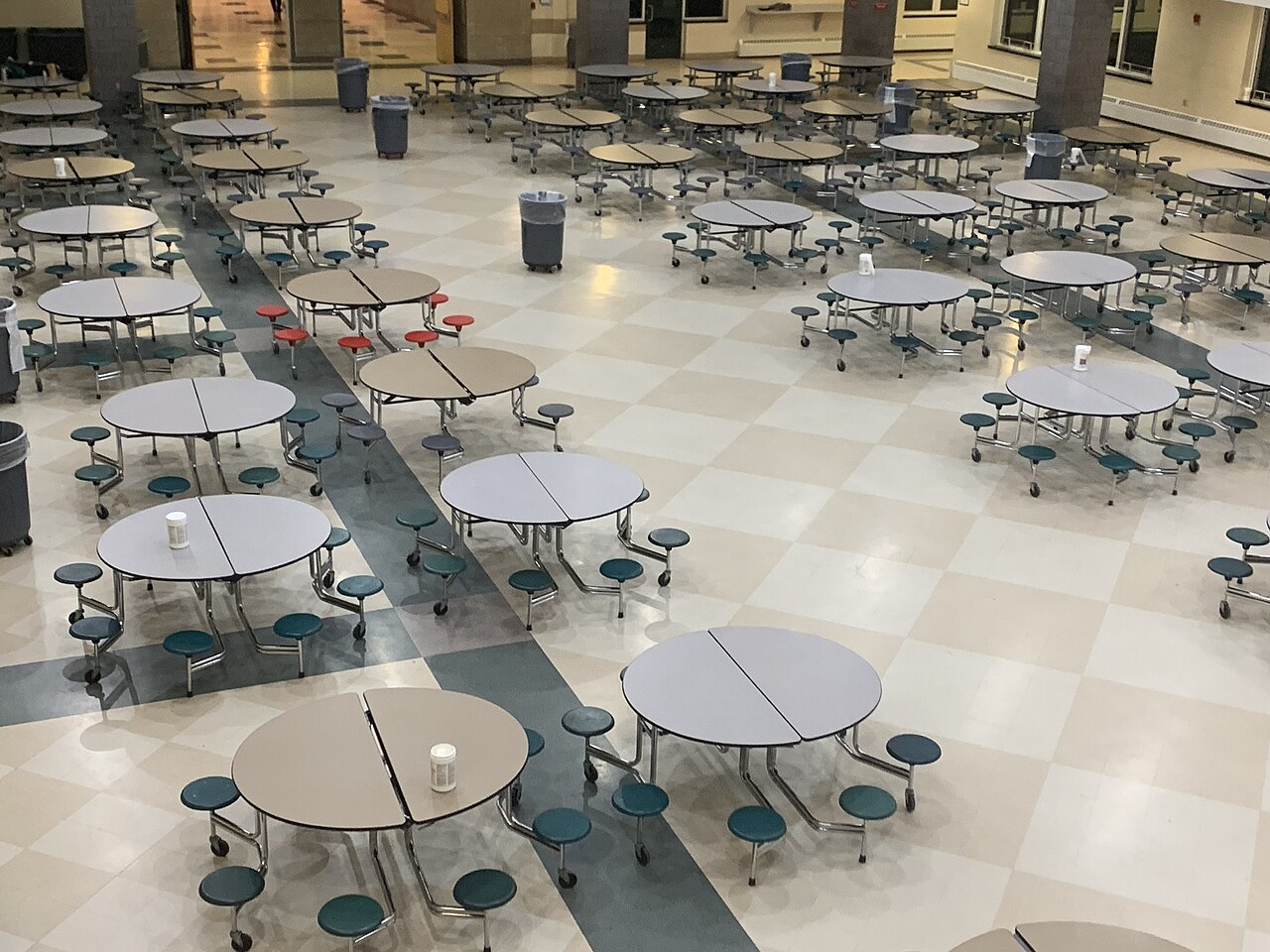
Sources: - U.S. Department of Agriculture, “USDA Announces Harvest to Hallways Initiative to Invest in Child Nutrition Programs,” August 24, 2026 - USDA Food and Nutrition Service, “National School Lunch Program: Participation and Lunches Served,” data as of August 14, 2026 - ABC11, “Back-to-school Guide 2026: What families in Wake, Durham, Cumberland and Orange counties need to know,” August 23, 2026 - U.S. Environmental Protection Agency, “Wasted Food Scale” and “From Field to Bin: The Environmental Impacts of U.S. Food Waste Management Pathways” - Featured image: “Empty school cafeteria,” Three Sixty via Wikimedia Commons, CC0